Mark Your Calendars: Professional Development on Reading Days!
October 13 and 14 will bring a variety of professional learning opportunities from across the college, offering something for a range of interests, roles, and professional goals. CCIT will offer sessions ranging from shared file management and productivity to engaging Brightspace content and thoughtful approaches to AI. Explore the full range of offerings for Reading Days on the Delaware Tech Professional Development calendar.
Lunch and Learn Opportunities
As the semester moves toward its final stretch, take a little time to focus on what makes teaching meaningful, reflective, and sustainable. In our upcoming Lunch and Learn sessions, we’ll explore practical ways to create a classroom where every student feels welcome, learn from the voices of our students to strengthen our teaching, and rethink end-of-semester rest as an important part of preparing for what comes next. Along the way, we’ll share simple strategies, Brightspace tools, and a few AI-assisted ideas that can make this work a little easier.

Try Creator+ in Brightspace
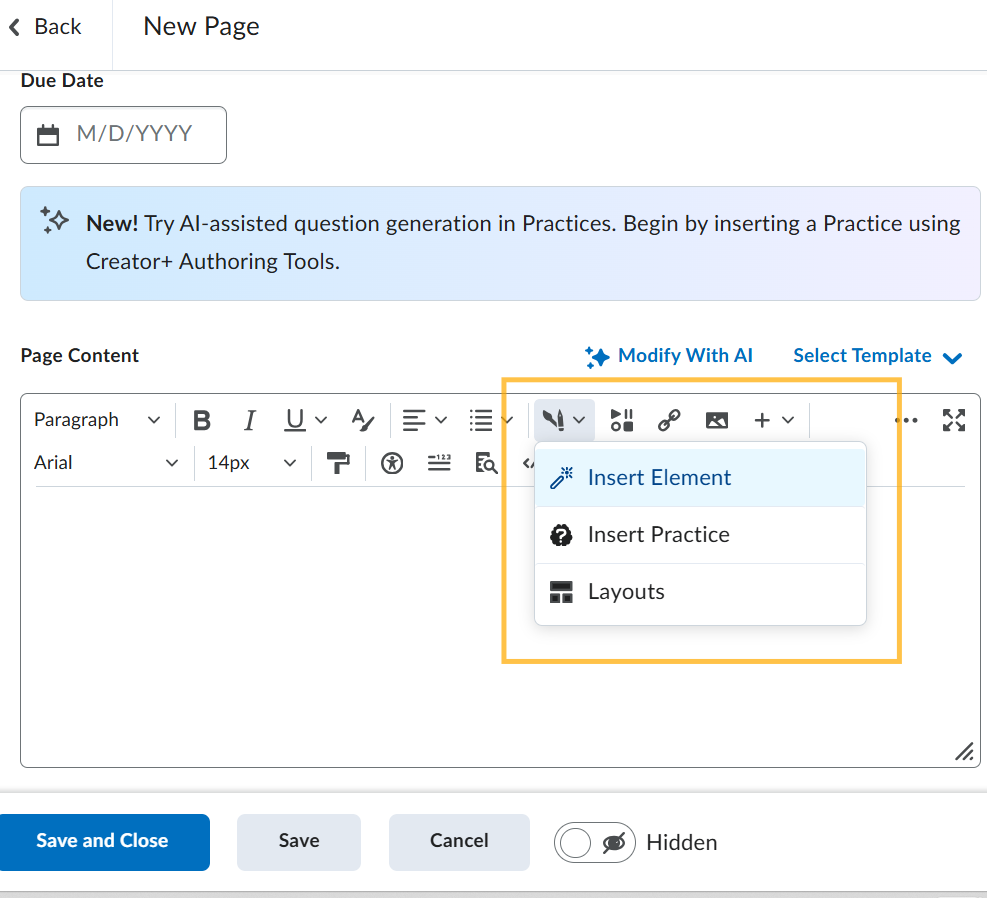
Have you explored Creator+ in Brightspace yet? This suite of tools gives you new ways to create engaging, interactive learning experiences right within your course.
One simple example is an accordion, which allows you to organize information into expandable sections so students can focus on one topic at a time without being overwhelmed by a long page of content. Accordions can be especially helpful for online learning because they make course pages easier to scan, encourage students to interact with the content, and keep important information organized in a compact format.
Ready to get started? Check out our Creator+ User Manual for step-by-step guidance, or enroll in the D2L Creator+ course to explore more interactive options and discover how Creator+ can enhance your courses.
You can also learn more about Creator+ on October 13 – see the Delaware Tech Professional Development Calendar for more information.

Teaching Neurodivergent College Students: Recommendations from your Colleagues
This episode of Tea for Teaching, 446. Teaching Neurodivergent College Students, explores how instructors can better support neurodivergent college students by understanding both the challenges they may experience and the strengths they bring to higher education. Jennifer Pusateri discusses practical strategies including breaking up passive lecture time with active learning, providing structure and clear organization, offering choice and multiple forms of representation through Universal Design for Learning (UDL,) and using transparent assignment design/TILT. A central message is that many of these practices are not only supportive of neurodivergent students but can improve learning, engagement, and accessibility for all students.
As you listen, it is important to note that the strategies discussed are broadly applicable, but individual neurodivergent students may have very different experiences, so the examples should not be treated as universal characteristics. The episode also includes prevalence statistics and generalizations that may vary depending on how neurodivergence is defined, so those claims are best understood as context rather than definitive numbers.
If you would like to share your recommendations, please visit the Faculty Survey. We would love to hear from you.

You Asked, We Listened: Intelligent Agents
You asked, and we listened! Our recent faculty survey showed that many of you are interested in learning more about Intelligent Agents in Brightspace. Intelligent Agents can automatically send personalized messages to students based on their course activity, helping you stay connected with students and provide timely reminders, encouragement, and support.
Want to learn more? Check out our two-part Lunch and Learn series for a helpful introduction to Intelligent Agents and how you can use them in your courses. Discover how Intelligent Agents can help you build connection and communication into your courses!

Two Resources for Staying Connected
Looking for ways to strengthen student engagement and gather feedback as the semester progresses? Start by exploring the Student Engagement module in our redesigned Instructor Hub in Brightspace. You’ll find practical strategies and ideas to help you create meaningful connections with your students.
A simple strategy is a mid-semester check-in using a Brightspace survey. Asking students what is working well, where they may be struggling, and what support they need gives you valuable feedback while there is still time to make adjustments. It also lets students know that their experiences and perspectives matter. Check out our two-part session about Listening on Purpose to learn how to create and use a mid-semester survey in Brightspace!

AI in Focus at Fall Convocation
The conversation about AI and higher education officially kicks off at Fall Convocation on October 14. Dr. José Antonio Bowen will explore the evolving role of artificial intelligence in teaching, learning, and critical thinking (Learn more about Dr. Bowen and his work). Following Convocation, faculty will have additional opportunities to explore AI through afternoon professional development sessions, including CCIT offerings that take a deeper dive into creating engaging Brightspace content and using AI thoughtfully to support teaching and learning.
From Answer Machine to Thought Partner
Two recent EDUCAUSE Review articles complement this conversation by offering additional perspectives on what it might mean to think and teach with AI. What if the most interesting use of AI in higher education is not getting an answer, but thinking with it?
- AI as a Thought Partner in Higher Education
- The Agentic Professor: Exploring GenAI-Supported Futures in Higher Education
One article describes AI as a “thought partner” that can help students explore ideas, question assumptions, identify gaps, and refine their thinking. The concept of the Agentic Professor takes this a step further, imagining AI that can sustain personalized learning conversations over time, remember a student’s previous questions and challenges, and adapt its approach as the student develops. Together, these ideas invite us to think beyond AI as a tool for producing content and toward AI as a partner in the learning process.
For faculty, the question becomes: How might we design learning experiences in which AI helps students think more deeply rather than simply do the work?
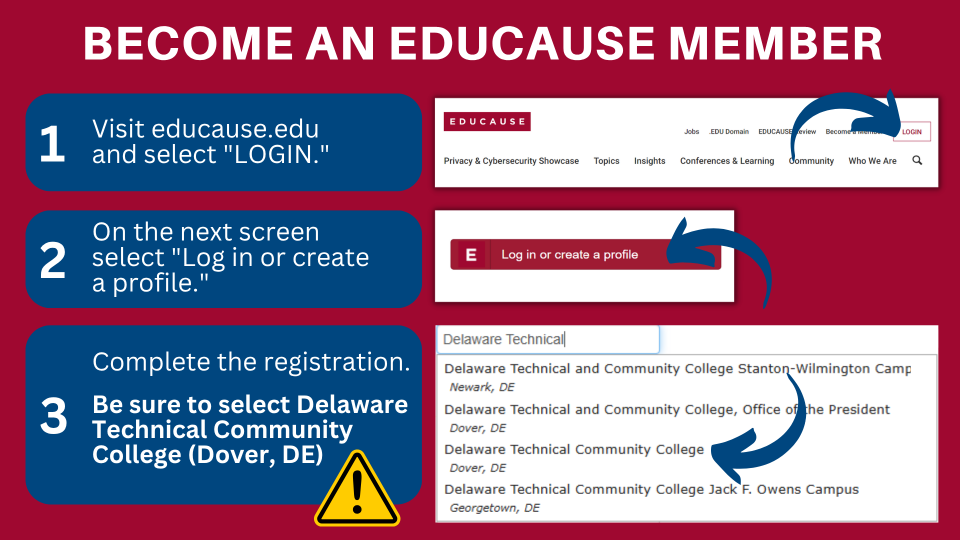
Delaware Technical Community College is a member of EDUCAUSE. Use the directions below to learn how to become a member!